Vier tekstboeken vormen de basis van schriftelijk studiemateriaal.
1. A Pocket Guide to Psychology for designers (Joe Leech)
2. It’s Our Research (Tomer Sharon)
3. “100 Things Every Designer Needs to Know About People” (Susan Weinschenk)
4. Designing for Behavior Change (Stephen Wendel)
Zie ook “Myths about the Brain and Perception”
Daarnaast zijn een 8-tal workshops beschikbaar in PDF vorm. Deze kunnen worden gegeven op aanvraag tijdens de cursus.
[dg attachment_pg=”false” paginate=”true” ids=”1302,1263,1265,1377,1429,1474,1513,1550″]
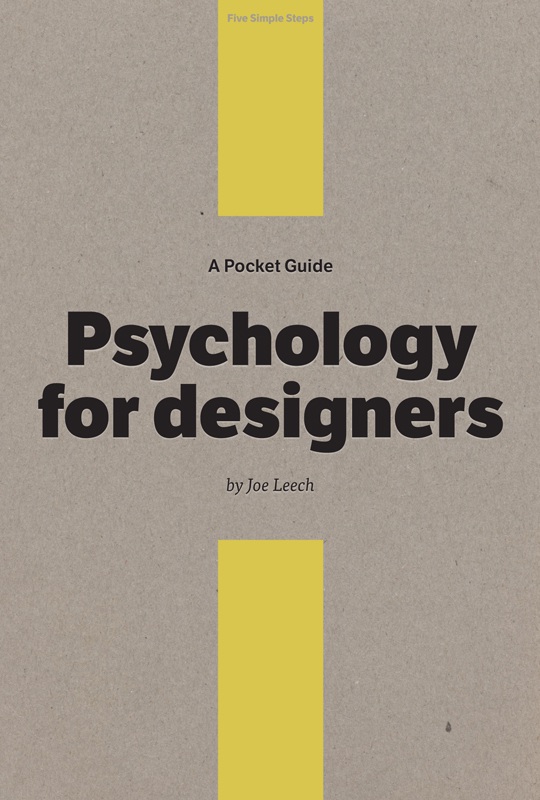 How to apply psychology to web design and the design process. In this book, I will show you how psychological theory can be applied to design. It won’t demand you read every single research study. In fact, it contains very little in the way of theory. What it will show you are the benefits of taking a psychological approach, as well as how to find and apply relevant ideas, and advocate your design decisions based on sound psychological reasoning, making your designs – and the way you talk about them – better.
Part 1: How understanding psychology can make you a better designer
What psychology brings to design and how we can use it to improve our designs and make us better at what we do.
Part 2: The different types of psychology
An overview of the major types of psychology and how useful they are at informing design.
Part 3: Finding and using psychological theories
How to solve a problem using psychology and where to find papers and studies to inform our designs.
Part 4: Advocating design using psychology
How to use psychology to talk about the benefits of our designs, and how to to test and improve on our designs.
Part 5: Taking your psychology studies further
An overview of university programmes and online courses to learn psychology theory appropriate to design and designers, as well as further links, reading and resources.
Part 6: Psychology every Designer should know
New! Psychology gives a framework for understanding how your users think and behave. Matching your design to your users' behaviour is a sure fire route to design success.
Part 7: Psychology myths in design
New! Popular myths (7 +/- 2 anyone?) in psychology and how to spot a myth.
How to apply psychology to web design and the design process. In this book, I will show you how psychological theory can be applied to design. It won’t demand you read every single research study. In fact, it contains very little in the way of theory. What it will show you are the benefits of taking a psychological approach, as well as how to find and apply relevant ideas, and advocate your design decisions based on sound psychological reasoning, making your designs – and the way you talk about them – better.
Part 1: How understanding psychology can make you a better designer
What psychology brings to design and how we can use it to improve our designs and make us better at what we do.
Part 2: The different types of psychology
An overview of the major types of psychology and how useful they are at informing design.
Part 3: Finding and using psychological theories
How to solve a problem using psychology and where to find papers and studies to inform our designs.
Part 4: Advocating design using psychology
How to use psychology to talk about the benefits of our designs, and how to to test and improve on our designs.
Part 5: Taking your psychology studies further
An overview of university programmes and online courses to learn psychology theory appropriate to design and designers, as well as further links, reading and resources.
Part 6: Psychology every Designer should know
New! Psychology gives a framework for understanding how your users think and behave. Matching your design to your users' behaviour is a sure fire route to design success.
Part 7: Psychology myths in design
New! Popular myths (7 +/- 2 anyone?) in psychology and how to spot a myth. 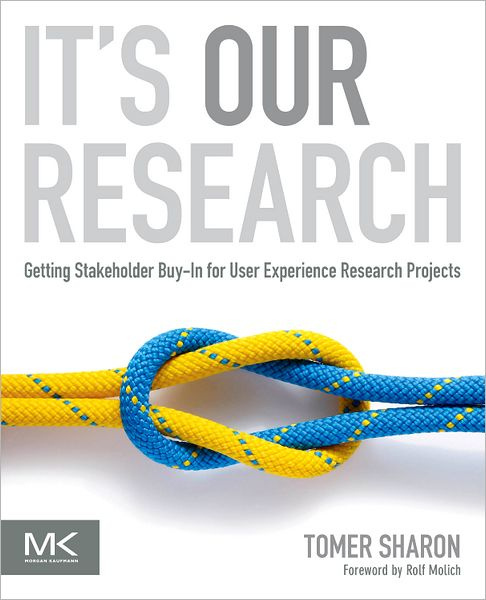 It's Our Research provides a strategic framework for people who practice UX research who wish to be heard by their stakeholders.It gives you the techniques needed to involve stakeholders throughout the process of planning, execution, analysis, and reporting UX research. Dramatically increase the chances that product managers, engineers, and management agree to do research and act upon its results; follow Tomer Sharon's techniques and methods detailed inside.*Features a series of video interviews with UX practitioners and researchers *Provides dozens of case studies and visuals from international research practitioners *Provides a toolset that will help you justify your work to stakeholders, deal with office politics, and hone your client skills *Presents tried and tested techniques for working to reach positive, useful, and fruitful outcomes
 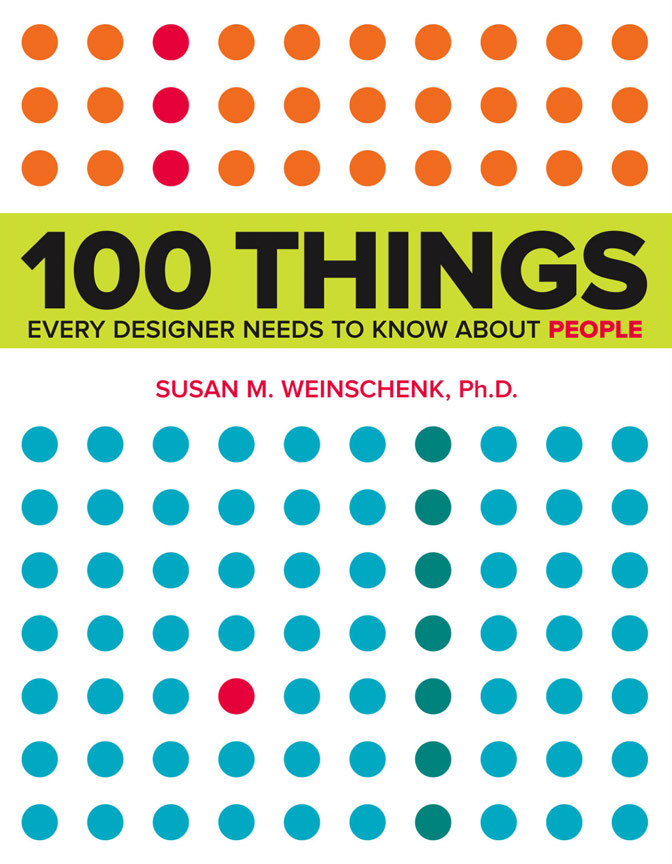 We design to elicit responses from people. We want them to buy something, read more, or take action of some kind. Designing without understanding what makes people act the way they do is like exploring a new city without a map: results will be haphazard, confusing, and inefficient. This book combines real science and research with practical examples to deliver a guide every designer needs. With it you ll be able to design more intuitive and engaging work for print, websites, applications, and products that matches the way people think, work, and play.
Learn to increase the effectiveness, conversion rates, and usability of your own design projects by finding the answers to questions such as:
What grabs and holds attention on a page or screen?
What makes memories stick?
What is more important, peripheral or central vision?
How can you predict the types of errors that people will make?
What is the limit to someone s social circle?
How do you motivate people to continue on to (the next step?
What line length for text is best?
Are some fonts better than others? These are just a few of the questions that the book answers in its deep-dive exploration of what makes people tick.
" (less)
We design to elicit responses from people. We want them to buy something, read more, or take action of some kind. Designing without understanding what makes people act the way they do is like exploring a new city without a map: results will be haphazard, confusing, and inefficient. This book combines real science and research with practical examples to deliver a guide every designer needs. With it you ll be able to design more intuitive and engaging work for print, websites, applications, and products that matches the way people think, work, and play.
Learn to increase the effectiveness, conversion rates, and usability of your own design projects by finding the answers to questions such as:
What grabs and holds attention on a page or screen?
What makes memories stick?
What is more important, peripheral or central vision?
How can you predict the types of errors that people will make?
What is the limit to someone s social circle?
How do you motivate people to continue on to (the next step?
What line length for text is best?
Are some fonts better than others? These are just a few of the questions that the book answers in its deep-dive exploration of what makes people tick.
" (less) 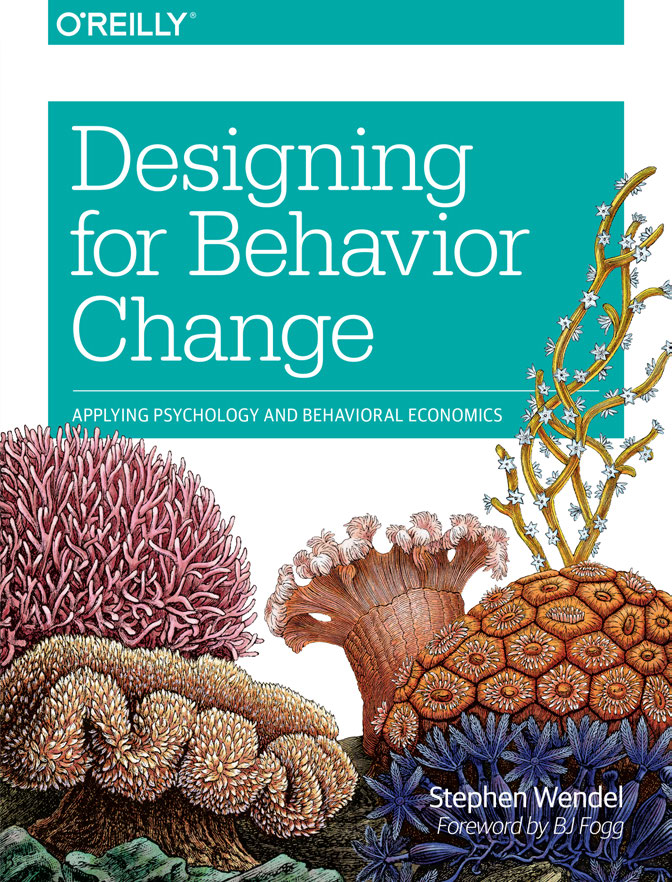 Behavioral economics, psychology and persuasive technology have proven to be very popular topics over the past decade. These subjects all have one aspect in common; they help us understand how people make decisions in their daily lives, and how those decisions are shaped by people’s prior experiences and their environment. A question then arises around what it means to change people’s behaviors and how one can design to achieve such change.